DIY
DIY
That dreaded “No Service” message staring back at you from the top corner of your iPhone. It’s incredibly frustrating, cutting you off from calls, texts, and mobile data. You’re holding a powerful mini-computer, but without a signal, it’s just a fancy paperweight.
As someone who’s troubleshooted this issue countless times, I can tell you the fix is often surprisingly simple. But you need to approach it methodically. Let’s walk through the steps like a pro, from the easiest checks to the more involved fixes.

The Quick Fixes: Try These First (Always!)
Before you panic or start messing with deeper settings, always run through these basics. They solve the problem more often than you’d think.
1. Toggle Airplane Mode On and Off
This is the fastest way to force your phone to reconnect to the cellular network. Swipe down from the top-right (or up from the bottom on older iPhones) to open Control Center. Tap the Airplane icon to turn it on (it turns orange). Wait about 15 seconds, then tap it again to turn it off. Watch the top corner – it might just find service again.
2. Restart Your iPhone
The classic tech support answer for a reason. Restarting clears temporary software glitches that might be blocking your connection. Press and hold the side button and one of the volume buttons until the “slide to power off” slider appears. Turn it off, wait 30 seconds, then turn it back on.
3. Check for Carrier Outages
Is it just you, or is everyone else on your carrier having issues too? Do a quick search online (using Wi-Fi, obviously) for “[Your Carrier Name] outage [Your Area]”. Sites like DownDetector can be helpful. If there’s a major outage, you just have to wait it out.
4. Check Your Physical Location
Are you deep inside a building, in an underground parking garage, or out in the middle of nowhere? Sometimes “No Service” just means… no service is available *there*. Step outside or move to a window and see if the signal bars reappear.
Intermediate Checks: Digging a Little Deeper
If the quick fixes didn’t work, let’s check some settings.
5. Check Cellular Settings
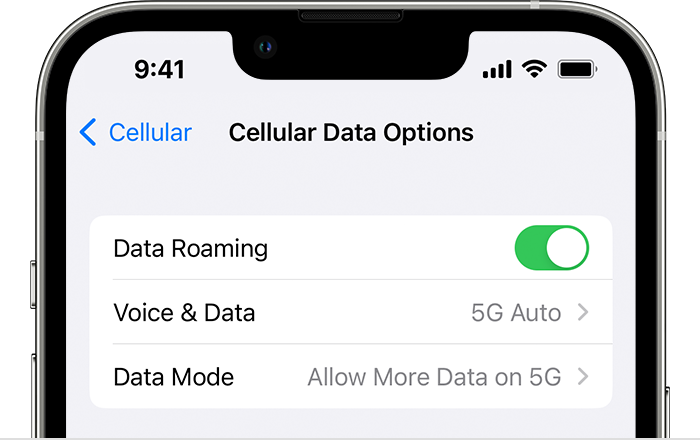
Go to Settings > Cellular (or Mobile Data). Make sure the “Cellular Data” toggle is ON. Also, tap “Cellular Data Options” and ensure “Voice & Data” is set correctly (usually 5G Auto or LTE).
6. Update Carrier Settings
Sometimes your carrier pushes out small updates to improve network connectivity. Your iPhone usually prompts you, but you can check manually. Go to Settings > General > About. If an update is available, you’ll see a pop-up within about 10-15 seconds. Tap “Update.”
7. Update iOS
Major iOS updates often include updates to the modem firmware (the part that talks to the cell towers). A bug in older firmware could be the cause. Go to Settings > General > Software Update and install any available updates.
Advanced Troubleshooting: Before You Call Support
Still no luck? These steps are a bit more involved but often solve stubborn issues.
8. Reseat Your SIM Card
Your SIM card (or eSIM profile) is how your phone identifies itself to the network. Sometimes, simply taking it out and putting it back in can fix the connection.
- Physical SIM: Find the small tray on the side of your iPhone. Use a SIM eject tool (or a small paperclip) to pop the tray out. Remove the SIM card, check it for dust or damage, wipe it gently with a microfiber cloth, and reinsert it. Restart your phone.
- eSIM: There’s nothing physical to remove. Sometimes toggling your eSIM off and on in Settings > Cellular can help, but often requires contacting your carrier to refresh the profile if it’s corrupted.
9. Reset Network Settings
This is a bigger step, but very effective. It erases all your saved Wi-Fi passwords, Bluetooth pairings, and cellular settings, forcing the phone to start fresh with network connections. **Crucial:** This does *not* erase your data (photos, apps, etc.), but you *will* have to re-enter Wi-Fi passwords afterwards.
Go to Settings > General > Transfer or Reset iPhone > Reset > Reset Network Settings. Your phone will restart.
Rookie Mistake: Confusing “Reset Network Settings” with “Erase All Content and Settings.” Do NOT choose the latter unless you want to completely wipe your phone!
When It’s Not Your Phone: External Factors
If you’ve done all the above and *still* have “No Service,” the problem likely isn’t something you can fix yourself.
10. Contact Your Carrier
This is essential. Call your mobile carrier’s customer support (you might need to use Wi-Fi Calling, another phone, or visit a store). Ask them to:
- Verify your account is active and in good standing (no unpaid bills).
- Confirm there are no local outages affecting your specific address.
- Check that your device isn’t accidentally blocked or blacklisted.
- Ensure you have the correct data plan provisioned for your line.
- (If using eSIM) Ask them to refresh or reprovision your eSIM profile.
11. Possible Hardware Failure
If your carrier confirms everything is fine on their end, and you’ve tried all the troubleshooting steps (including potentially testing your SIM in another phone), then it’s possible your iPhone has a hardware problem (like a faulty antenna or modem). You’ll need to contact Apple Support or visit an authorized repair center for diagnosis.
FAQs: Quick Answers
Why did my iPhone suddenly lose service?
Common reasons include: temporary carrier outage, being in a poor signal area (building, geography), a software glitch (fixed by restart or update), incorrect cellular settings, a problem with your SIM card, or an issue with your carrier account.
What’s the difference between “No Service” and weak signal?
“No Service” means your phone cannot connect to the cellular network *at all*. Weak signal means it’s connected, but the connection is poor (slow data, dropped calls). Weak signal issues are often location-based or caused by network congestion.
Does resetting network settings delete my photos or apps?
No. Resetting network settings *only* removes network-related configurations like Wi-Fi passwords and Bluetooth pairings. Your personal data, apps, photos, etc., remain untouched.
Conclusion: Be Methodical
Seeing “No Service” is stressful, but don’t jump straight to resetting everything. Work through these steps methodically, from simple to complex. Start with Airplane Mode and a restart. Check your location and carrier status. Update your software and carrier settings. Then consider reseating the SIM or resetting network settings.
If none of that works, it’s time to call your carrier. By following this process, you can solve most “No Service” issues yourself and get your iPhone back online.