DIY

Carding is not a dusty trick from the dial up era. It is a live, automated, globally distributed cybercrime problem sitting on top of every bank, every checkout page and every card in your wallet. Fraudsters in 2026 are faster than the people paid to stop them, and the tooling they use is largely off the shelf.
Security has improved. It just has not improved fast enough to close the door.

If you run an online store, handle payments, or simply pay for things with a card, understanding the mechanics matters. Not the hype version. The real one, because prevention is impossible against a process nobody has bothered to map.
This is that map, aimed at awareness rather than awe. Current tested stock for anything below sits at cvvplug.co.
What Carding Actually Is
Carding is financial fraud built on stolen card data. No physical plastic changes hands. The attacker works from numbers, expiry dates, and sometimes the security code, and converts them into goods or cash before anyone notices.
That data arrives through a short and familiar list of doors. Breaches at badly defended websites. Phishing pages dressed as a login you already trust. Malware recording keystrokes on a home machine. Payment systems left soft at the edges.
Once the data is in hand, the clock starts. It gets tested and spent before the card is frozen.
The Four Stages, In Order
Modern operations are structured, staggered and automated. Nobody is typing numbers one at a time and hoping.
Stage one, collection. Access comes from a breached retailer, a cloned login page, an infected device, or a thin checkout with loose validation. In 2026 a full dataset can be circulating within minutes of the breach that produced it.
Stage two, validation. Before anything expensive is attempted, the cards get tested. One to five dollar charges, digital subscriptions, scripted runs hammering hundreds of numbers at once. The point is to sort live cards from dead ones and stop wasting time on corpses.
Stage three, cash out. Confirmed live cards go after value. Electronics, gift cards, digital goods, online services. Anything that converts fast and ships without a signature.
Stage four, exit. Everything happens quickly, because fraud systems and banks eventually catch up. The whole operation is built around beating that window.
Why It Still Works
Weak store security. Plenty of platforms have no meaningful fraud defence at all.
Automation. Bots burn through thousands of cards in the time a human spends on ten.
Predictable users. Password reuse and a convincing phishing page still do the job they did a decade ago.
Reversibility. Digital payments move faster than disputes resolve.
That combination is why the problem persists despite a decade of countermeasures.
What Businesses Can Do
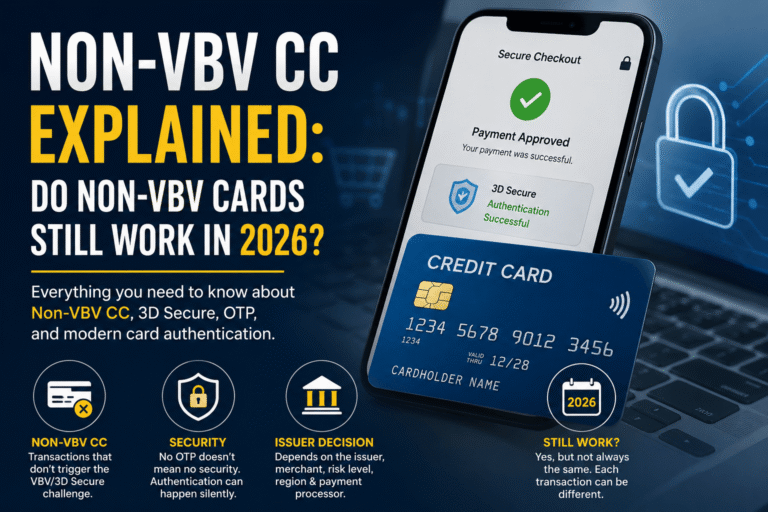
Authentication that means something. Multi factor, one time passcodes, 3D Secure. Each step costs a little friction and removes a class of attacker.
Behavioural monitoring. Rapid fire transactions, several cards from one device, impossible travel between sessions. Patterns are loud when anyone is listening.
Bot protection. CAPTCHA, rate limiting, detection tools. Scripted testing dies on all three.
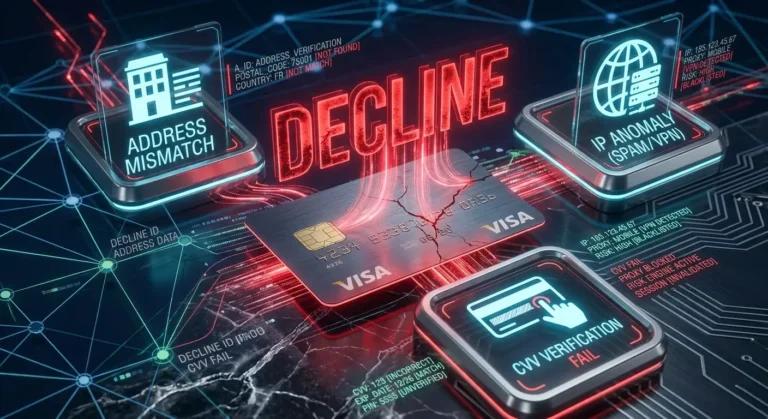
AVS and CVV checks. Verify the billing address, demand the security code. Together they kill most partially captured records.
Geo and IP monitoring. Flag proxies, VPN ranges and regions that do not match the cardholder.
Machine learning on top. Real time anomaly detection, trained on your own traffic rather than a generic model.
What Individuals Can Do
Unique passwords, not reused across sites. Two factor everywhere it is offered. Virtual cards for anything unfamiliar. Regular statement checks. And a hard rule about unsecured sites.
None of it is exotic. All of it works.
Signs a Card Has Been Compromised
An unrecognised small charge, then silence. Failed transaction alerts you did not cause. Purchases you never made. Logins from places you have not been.
The moment any of those land, phone the bank and freeze the card. Replacement is cheaper than the argument.
Where the Fraud Gets Its Fuel
The data pipeline deserves a closer look, because most people picture a card being skimmed at a petrol pump and stop there. Breaches are the bulk of it, and the bulk is why individual numbers sell for pennies. Infostealers and cloned login pages are cleaner product because the billing address arrives attached. Skimmers still exist at physical terminals. Insider capture, a number written down mid conversation, remains low volume and high reliability.
Because most records are dead on arrival, the profit lives in the test and spend loop rather than in the data itself. That economics explains the automation. Buying a thousand records to find the fifty that authorise is cheaper than stealing one carefully.
Where Carding Is Heading
What is actually being fought now is a speed contest between automated fraud and automated defence. Nobody wins permanently. The side that adapts faster holds the advantage until the other catches up.
For merchants that means treating every checkout as contested ground. For cardholders it means accepting that the data is already out there somewhere and behaving accordingly. nonvbvshop.net carries live tested inventory with per site behaviour documented, which is the same principle applied to stock rather than security.
FAQ
Is carding still common in 2026?
Yes, and more automated than it has ever been. Frequent breaches keep the supply steady.
How do attackers get the details?
Breaches, phishing pages, malware, and weak checkout systems.
What is a test charge?
A tiny transaction, usually a dollar or two, used to confirm a card is live before anything valuable is attempted.
Can banks stop it entirely?
No. Good detection shrinks it substantially, but the door never fully closes.
What do I do about a suspicious charge?
Call the bank, freeze the card, replace it. Do not wait to see if it resolves.
Are online payments safe?
Yes with proper defences in place. No with none.
Are small sites more exposed?
Generally, yes. Fewer defences, less monitoring, same value to a fraudster.
What is the single best prevention?
Strong authentication plus monitoring plus awareness. No one of those carries it alone.
Final Word
Carding lives on slack systems, late detection and plain inattention. Tighten all three and it becomes a nuisance rather than a threat. fullzplug.to and cardingclub.ru keep the current ranges and reader reports that show which merchants still hold the line.
Stay current, keep the defences boring and consistent, and check activity before the bank does it for you.
Educational content only, written for security awareness and fraud prevention.