DIY
DIY
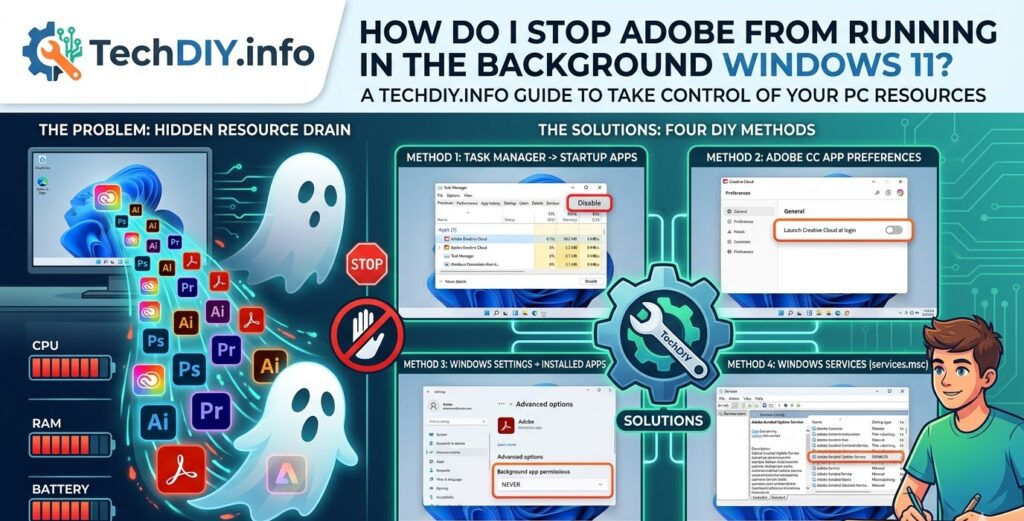
Adobe Creative Cloud is notorious for launching multiple background processes at startup, quietly consuming RAM and CPU even when you’re not using any Adobe apps. The good news: you can stop it. Here are all the methods to prevent Adobe from running in the background on Windows 11.

Why Is Adobe Always Running in the Background?
Adobe Desktop Service is the core engine behind all Creative Cloud apps. It runs in the background to manage your licenses, check which apps are available in your subscription, and download updates automatically. While this is useful if you use Adobe apps daily, it’s unnecessary overhead if you only open Photoshop or Acrobat occasionally.
On a typical Windows 11 machine, Adobe Creative Cloud can spawn anywhere from 5 to 16+ background processes at startup — including Creative Cloud, CCXProcess, Adobe Update Startup Utility, Adobe Creative Cloud Invoker Utility, and more.
Method 1: Disable Adobe from Startup (Task Manager)
This is the fastest way to stop Adobe from launching automatically every time you boot Windows 11:
- Press Ctrl + Shift + Esc to open Task Manager
- Click the Startup apps tab
- Find and right-click each of the following entries and select Disable:
- Adobe Creative Cloud
- CCXProcess
- Adobe Update Startup Utility
- Adobe Creative Cloud Invoker Utility
- Restart your computer for changes to take effect
Adobe apps like Photoshop will still launch normally — they will simply start Creative Cloud on demand instead of running it at all times in the background.
Method 2: Disable Background App Permissions (Windows Settings)
Windows 11 has a built-in setting to block specific apps from running in the background:
- Open Settings > Apps > Installed apps
- Find Adobe Creative Cloud in the list
- Click the three-dots menu beside it and select Advanced options
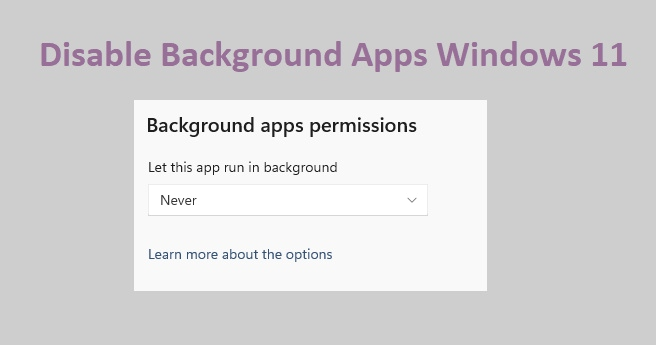
- Scroll down to Background apps permissions
- Change the dropdown from Let Windows decide to Never
Method 3: Turn Off Auto-Launch Inside Creative Cloud
You can also configure Adobe’s own settings to stop it from self-launching:
- Open the Creative Cloud desktop app
- Click your profile icon (top right) and go to Preferences
- Under the General tab, disable:
- Launch Creative Cloud at login
- Run Creative Cloud in the background after closing
- Under Apps, turn off Auto-update if you want to manage updates manually
Method 4: Disable Adobe via Task Scheduler
Adobe installs scheduled tasks that can relaunch its processes even after you disable startup entries. To fully stop them:
- Press Windows + S and search for Task Scheduler
- In the left panel, expand Task Scheduler Library
- Look for any tasks with “Adobe” in the name
- Right-click each one and select Disable
This prevents Adobe from using Windows’ own scheduling system to restart its background services without your knowledge.
Method 5: Stop Adobe Services Manually
If Adobe processes are already running and you want to kill them immediately without restarting:
- Press Ctrl + Shift + Esc to open Task Manager
- Go to the Processes tab
- Look for Adobe-related entries (Adobe Desktop Service, CCXProcess, etc.)
- Right-click and select End task
To stop them more permanently via Services:
- Press Windows + R, type services.msc, and hit Enter
- Find any Adobe service in the list
- Right-click it and select Stop, then set Startup type to Manual or Disabled
Does Adobe Creative Cloud Need to Run at Startup?
No — it does not need to run at startup for your Adobe apps to work. When you launch an app like Photoshop or Illustrator, it will automatically start Creative Cloud in the background and prompt you to sign in if needed. Disabling startup entries simply means Adobe waits until you actually need it.
Is It Safe to Uninstall Adobe Creative Cloud?
Adobe recommends keeping the Creative Cloud desktop app installed, as it manages your subscriptions and app updates. That said, you will not lose any files you created — uninstalling Creative Cloud does not delete Photoshop documents, PDFs, or any other project files from your computer. If you reinstall later, simply download the Creative Cloud installer from creative.adobe.com.
How to See All Background Processes on Windows 11
To get a full picture of everything running in the background at any time:
- Press Ctrl + Shift + Esc to open Task Manager
- Go to the Processes tab
- You’ll see all active apps and background processes, along with their CPU and RAM usage
- Click the CPU or Memory column header to sort by resource usage
Frequently Asked Questions
What is CCXProcess and can I disable it?
CCXProcess (Adobe Creative Cloud Experience) handles the notifications and plugin marketplace inside Creative Cloud. You can safely disable it from the Startup tab in Task Manager — it does not affect your ability to use Adobe apps.
What is Adobe Speed Launcher?
Adobe Reader Speed Launcher (arh.exe) is a legacy utility that pre-loads parts of Acrobat Reader at startup to make PDF files open faster. On modern SSDs, this is largely unnecessary. You can disable it from Task Manager’s Startup tab without any noticeable impact on PDF load times.
Will stopping Adobe background processes affect my subscription?
No. Your subscription is tied to your Adobe account, not the background services. Disabling startup processes or background apps will not cancel or affect your Creative Cloud plan.
How do I completely close Creative Cloud on Windows 11?
Click the Creative Cloud icon in the system tray (bottom-right corner), then open the app. Go to the File menu and select Exit Creative Cloud, or press Ctrl + W and confirm with Quit. This fully closes the app rather than minimizing it to the tray.