DIY
DIY
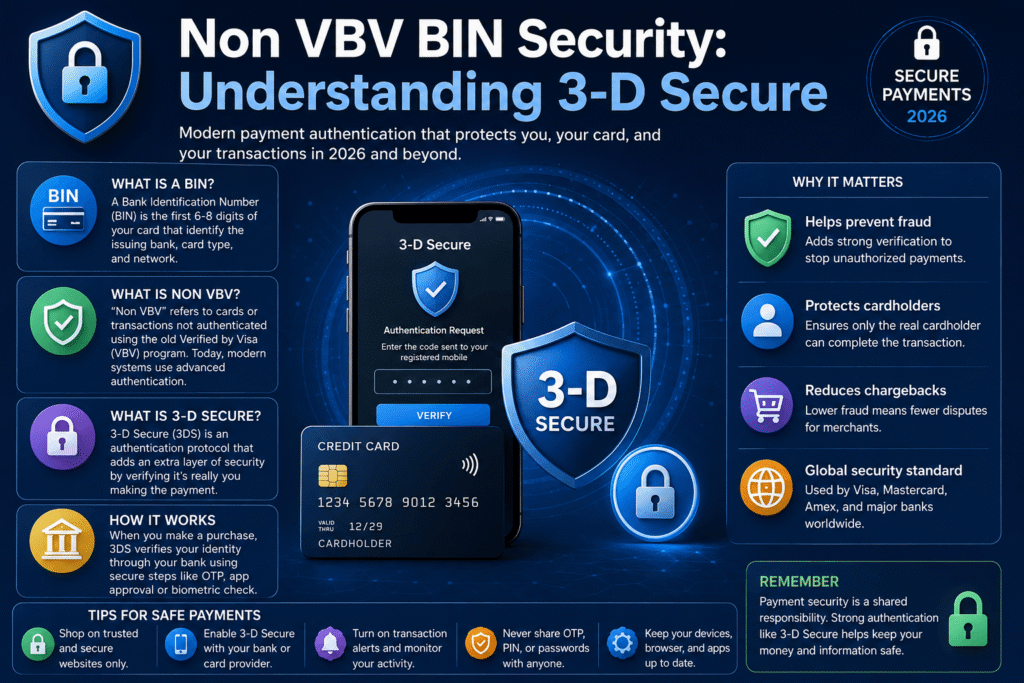
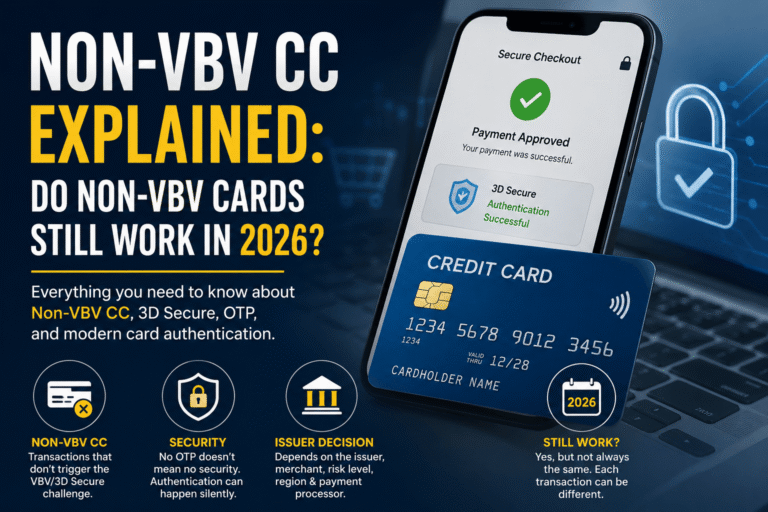
Non vbv bins 2026 Online payment security has changed dramatically over the past decade. As banks and payment networks continue to strengthen fraud prevention, terms like Non VBV BIN and 3-D Secure still appear in online discussions, often creating confusion. This guide explains what these terms mean, how modern card authentication works, and why payment security is more important than ever in 2026.
If you’ve spent any time reading about online payments, you’ve probably come across the phrase Non VBV BIN. Although it remains a popular search term, it often refers to outdated ideas about payment authentication.

Today’s payment ecosystem relies on multiple layers of security, with 3-D Secure playing a central role in protecting cardholders, merchants, and banks from fraud.
Understanding how these systems work helps consumers shop more safely and recognize common misconceptions about online card security.
What Is a BIN?
A Bank Identification Number (BIN) is the first series of digits on a payment card.
These digits help identify:
- The card issuer
- Card network
- Country of issuance
- Card type
- Funding type (credit, debit, prepaid)
Merchants and payment processors use BIN information to route transactions and perform risk assessments.
What Was Verified by Visa (VBV)?
Verified by Visa (VBV) was Visa’s original implementation of 3-D Secure, an authentication system designed to reduce payment fraud.
The idea was simple:
When a transaction appeared unusual or high-risk, the bank could request additional verification before approving the payment.
Today, payment authentication has evolved significantly beyond the original VBV program.
What Is 3-D Secure?
3-D Secure is an authentication protocol used during many online card payments.
Rather than relying only on card details, it allows the card issuer to verify that the person making the purchase is the legitimate cardholder.
Modern versions of 3-D Secure are designed to improve both security and the checkout experience by using risk-based authentication.
How Modern Card Protection Works
Banks now combine multiple security measures instead of relying on a single verification step.
These may include:
- Risk analysis
- Device recognition
- Transaction history
- Location consistency
- Behavioral analysis
- Fraud detection systems
Only when a transaction appears unusual may additional verification be requested.
Why Payment Authentication Matters
Online fraud continues to evolve every year.
Strong authentication helps:
- Protect cardholders
- Reduce unauthorized purchases
- Lower merchant fraud losses
- Improve confidence in digital payments
While no system can eliminate fraud completely, layered security significantly reduces risk.
Why the Term “Non VBV BIN” Still Appears
The phrase remains popular in online searches because it reflects terminology that circulated years ago.
However, payment networks and issuing banks have continued to improve authentication methods.
Instead of thinking in terms of “VBV” versus “Non VBV,” it is more accurate to understand that payment security today is based on a combination of fraud detection technologies and modern authentication standards.
Common Misconceptions
Myth 1: Every Online Purchase Requires Authentication
False.
Many legitimate transactions are approved without interrupting the customer because the issuer determines the risk is low.
Myth 2: One Security Feature Stops All Fraud
False.
Modern payment protection combines several technologies that work together.
Myth 3: Online Payments Are Unsafe
False.
Millions of secure transactions occur every day thanks to encryption, fraud monitoring, and authentication systems.
Tips for Safer Online Payments
Consumers can improve payment security by following a few simple practices:
- Shop with reputable merchants.
- Enable transaction notifications from your bank.
- Use strong passwords for financial accounts.
- Turn on multi-factor authentication where available.
- Regularly review account activity.
- Report suspicious transactions immediately.
These habits help reduce the impact of fraud and improve account security.
The Future of Payment Security
As digital commerce continues to grow, payment providers are investing in smarter fraud prevention.
Emerging trends include:
- AI-powered fraud detection
- Biometric authentication
- Tokenization
- Improved behavioral analysis
- Faster risk assessment
The goal is to make payments both safer and more convenient for legitimate customers.
Frequently Asked Questions
What is a BIN?
A BIN (Bank Identification Number) identifies the issuing institution and basic characteristics of a payment card.
What is 3-D Secure?
3-D Secure is a payment authentication protocol that helps banks verify online card transactions and reduce fraud.
Is Verified by Visa still used?
Verified by Visa has evolved into newer versions of the 3-D Secure standard, which offer a smoother and more secure payment experience.
Why do some purchases require extra verification?
Banks may request additional authentication when a transaction appears unusual or carries a higher fraud risk.
What does “Non VBV” mean?
“Non VBV” is a term that has historically been used to describe cards or transactions that were not authenticated using the original Verified by Visa (VBV) program. Today, modern payment authentication relies on updated versions of 3-D Secure and advanced fraud detection rather than the older VBV branding.
What is the difference between VBV and 3-D Secure?
Verified by Visa (VBV) was Visa’s original implementation of the 3-D Secure protocol. Today’s 3-D Secure standards provide more advanced authentication methods and a smoother checkout experience while helping reduce fraud.
Do all banks use 3-D Secure?
Many banks and payment providers support modern 3-D Secure technologies, although the exact implementation may vary depending on the card issuer, payment network, merchant, and country.
Why do some online purchases not ask for verification?
Modern authentication often uses risk-based analysis. If a transaction appears low risk, the issuing bank may approve it without requesting additional verification.
Does 3-D Secure prevent all payment fraud?
No. While it significantly reduces certain types of fraud, no security system is perfect. Banks combine 3-D Secure with other fraud detection tools to improve overall protection.
Is it safe to save my card on shopping websites?
Saving your card can be convenient, but it is generally safest to do so only with reputable merchants that use strong security measures and encryption. Enabling account alerts and reviewing transactions regularly is also recommended.
What should I do if I notice an unauthorized transaction?
Contact your bank or card issuer immediately, report the transaction, and follow their guidance. Many financial institutions have procedures to investigate fraudulent activity and help secure your account.
Can merchants see my PIN or banking password?
No. Legitimate merchants do not receive your banking PIN or online banking password during a standard card payment. Sensitive authentication is handled securely by your bank or payment provider.
Why are online payment security systems constantly changing?
Cybercriminals continuously develop new fraud techniques, so banks, payment networks, and merchants regularly improve authentication methods and fraud detection technologies to better protect customers.
How can I make my online payments more secure?
Use trusted websites, create strong unique passwords, enable multi-factor authentication where available, keep your devices updated, avoid suspicious links, and monitor your bank statements regularly for unusual activity.
How can I make online payments more secure?
Use trusted websites, enable account alerts, keep your devices updated, and monitor your accounts regularly for unauthorized activity.
Final Thoughts
Understanding payment security is more valuable than relying on outdated terminology. While phrases like Non VBV BIN still appear in online searches, today’s payment systems focus on intelligent fraud detection, modern authentication, and stronger protection for both consumers and merchants.
As online commerce continues to evolve, learning how these security measures work can help you make safer purchases and better protect your financial information.