DIY
DIY
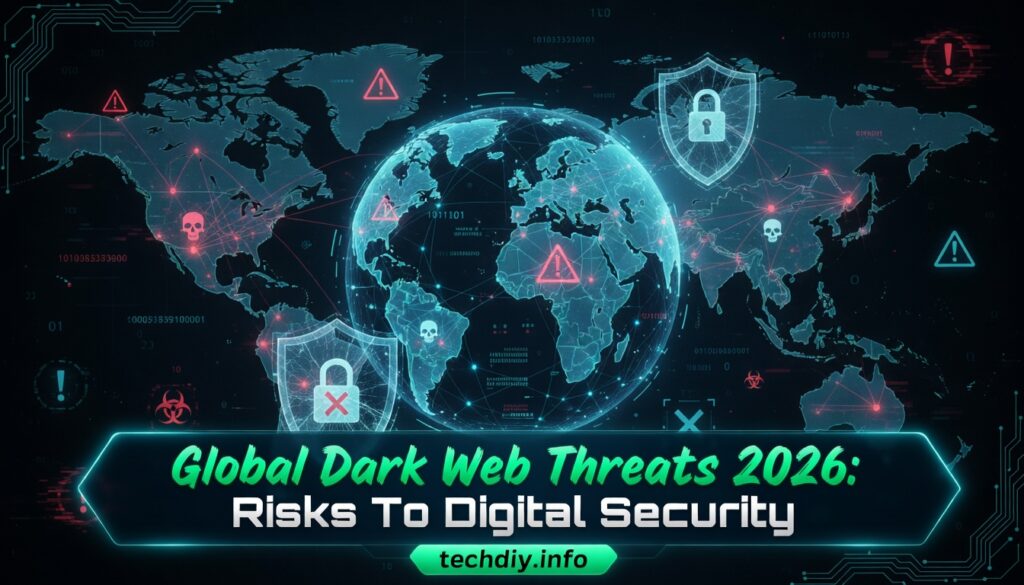
Global dark web threats 2026: The internet of 2026 is faster, smarter, and more connected than at any point in history. Artificial intelligence has become deeply integrated into business operations, cloud infrastructure powers everything from startups to multinational corporations, and digital services now sit at the center of modern commerce. Yet beneath this technological progress lies an uncomfortable reality. The same innovations that have improved productivity and connectivity have also expanded the opportunities available to cybercriminals.
Also Read about Dark Web Safety Guide 2026: What Every User Should Know
For many years, the Dark Web was portrayed as a mysterious corner of the internet populated by anonymous users and hidden marketplaces. While that image contains some truth, it no longer accurately reflects the modern threat landscape. Today’s underground cybercrime ecosystem operates more like a sophisticated business sector than a chaotic collection of hackers. Specialized groups offer services, customer support, subscription models, affiliate programs, and even reputation systems. Criminal enterprises increasingly mirror legitimate businesses in the way they organize, scale, and monetize their operations.

For organizations of every size, understanding this reality is essential. Cybersecurity is no longer solely an IT concern. It is a business continuity issue, a reputational issue, and increasingly a financial survival issue. The consequences of a successful cyberattack can include operational disruption, regulatory penalties, customer distrust, intellectual property theft, and significant financial losses.
This report examines the major Dark Web threats shaping corporate security in 2026 and explores the strategies organizations can adopt to strengthen their resilience in an increasingly hostile digital environment.
The Evolution of Cybercrime

Cybercrime has undergone a remarkable transformation over the last decade.
In the early days, cyberattacks were often carried out by individual actors seeking notoriety, financial gain, or technical challenges. Many attacks required substantial technical expertise, limiting participation to a relatively small group of skilled individuals.
That barrier has largely disappeared.
Today’s cybercrime ecosystem is characterized by specialization. Different groups focus on different stages of an attack lifecycle. One group may focus on discovering vulnerabilities. Another may specialize in credential theft. A separate organization may handle ransomware deployment, while another manages money laundering operations.
This specialization has dramatically increased efficiency.
The modern underground economy allows criminals to purchase services instead of developing them internally. As a result, attackers can operate faster, scale more effectively, and target a broader range of victims than ever before.
This shift has fundamentally changed the risk profile facing organizations around the world.
The Rise of Initial Access Brokers
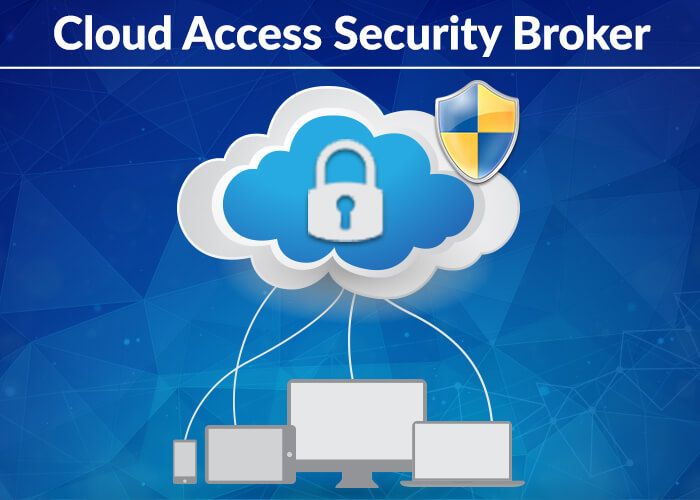
One of the most significant developments in recent years has been the emergence of Initial Access Brokers.
These actors specialize in obtaining access to corporate environments and selling that access to other criminal groups.
Rather than carrying out an entire attack themselves, they focus on the initial compromise stage. Once access has been established, it can be sold to ransomware operators, data thieves, espionage groups, or financially motivated attackers.
The value of this model is obvious.
Instead of spending weeks searching for vulnerabilities, a buyer can acquire ready-made access to a target organization.
This creates a highly efficient marketplace where access itself becomes a commodity.
Corporate networks, cloud environments, VPN accounts, remote desktop services, and administrative credentials have become valuable products traded in underground markets.
For organizations, this means that a single overlooked vulnerability can quickly become the entry point for multiple threat actors.
The Expanding Corporate Attack Surface

Digital transformation has brought enormous benefits to businesses. However, it has also expanded the number of potential entry points available to attackers.
Modern organizations rely on a wide range of interconnected technologies.
Cloud platforms host critical workloads. Employees access systems remotely. Third-party vendors connect through APIs. Collaboration platforms share data across multiple environments. Mobile devices routinely access corporate resources.
Each connection introduces potential risk.
The attack surface no longer consists solely of a company’s website or internal network. It now includes cloud services, software integrations, remote work infrastructure, employee devices, identity systems, and external partners.
Attackers understand this complexity and actively search for the weakest link.
In many cases, the most vulnerable component is not the primary network itself but a trusted system connected to it.
Credential Theft Remains a Dominant Threat

Despite advances in cybersecurity technology, stolen credentials remain one of the most effective tools available to attackers.
Passwords continue to be compromised through phishing campaigns, malware infections, weak password practices, and credential reuse.
Once credentials are obtained, attackers often gain access without triggering traditional security alerts.
To many systems, a stolen username and password appear identical to legitimate user activity.
This challenge has become even more severe due to the growing popularity of session hijacking techniques.
Rather than stealing passwords directly, attackers increasingly target session tokens that allow them to bypass authentication processes.
This approach enables attackers to assume the identity of legitimate users without needing to know their actual passwords.
As organizations become more reliant on cloud services and web-based applications, the value of these session artifacts continues to increase.
The Rise of Information-Stealing Malware

Information-stealing malware has become one of the most profitable categories of malicious software.
These tools are designed to collect sensitive information from infected devices.
Targets often include browser cookies, saved passwords, authentication tokens, autofill data, cryptocurrency wallet information, and corporate credentials.
The collected information is then aggregated and sold within underground marketplaces.
The significance of this trend cannot be overstated.
A single compromised employee device may expose access to dozens of corporate systems.
Because many organisations rely on single sign-on technologies, one successful compromise can potentially provide access to multiple applications simultaneously.
This makes endpoint security more important than ever.
Organizations must recognize that protecting individual devices is no longer a secondary concern. It is a critical component of enterprise security.
AI and the Acceleration of Cyber Threats
Artificial intelligence has become one of the defining technologies of the modern era.
Unfortunately, attackers have been quick to adopt it.
AI is now used throughout various stages of cyber operations.
It assists with reconnaissance, automates information gathering, generates persuasive phishing messages, identifies vulnerable systems, and accelerates decision-making processes.
One of the most visible impacts has been the evolution of phishing attacks.
Traditional phishing emails often contained grammatical errors, awkward language, and obvious warning signs.
Modern AI-generated messages are dramatically different.
They can mimic writing styles, adapt tone to specific audiences, and generate highly personalized content at scale.
This has increased the effectiveness of social engineering attacks while reducing the effort required to create them.
As AI capabilities continue to improve, organizations should expect phishing campaigns to become even more sophisticated.
The Human Element Remains Critical
Technology alone cannot solve cybersecurity challenges.
Human behavior continues to play a central role in both successful attacks and effective defenses.
Many breaches still begin with relatively simple actions.
An employee clicks a malicious link. A contractor reuses a password. A manager approves a suspicious request. A developer exposes sensitive information in a public repository.
These seemingly minor mistakes can create opportunities for attackers.
Security awareness training remains one of the most valuable investments organizations can make.
Employees should understand how modern threats operate, recognize warning signs, and know how to report suspicious activity.
Building a security-conscious culture helps transform employees from potential vulnerabilities into active participants in organizational defense.
Supply Chain Risks Continue to Grow
One of the most concerning trends in 2026 involves supply chain compromise.
Organizations increasingly depend on external providers for critical services.
Hosting companies, payment processors, software vendors, cloud platforms, analytics providers, and marketing tools all form part of the broader digital ecosystem.
A compromise affecting one provider can potentially impact thousands of customers.
This interconnectedness creates significant challenges.
Organizations may implement strong internal security controls while remaining vulnerable through trusted third-party relationships.
Supply chain attacks are particularly dangerous because they exploit existing trust.
When malicious activity originates from a trusted source, detection becomes more difficult.
Organizations must therefore evaluate vendor security practices with the same rigor applied to their own systems.
Cloud Security Challenges
Cloud adoption continues to accelerate across every industry.
While cloud services offer flexibility and scalability, they also introduce unique security considerations.
Misconfigured storage buckets, excessive permissions, exposed APIs, and improperly secured administrative accounts remain common sources of risk.
Many organizations mistakenly assume that moving to the cloud automatically improves security.
In reality, cloud security depends heavily on proper configuration and ongoing management.
Attackers actively scan cloud environments for weaknesses.
Even small misconfigurations can expose sensitive information or create opportunities for unauthorized access.
Organizations must understand their shared responsibility model and ensure security controls are implemented consistently across all cloud environments.
Ransomware Continues to Evolve

Ransomware remains one of the most disruptive threats facing organizations.
Modern ransomware groups operate as sophisticated criminal enterprises.
They conduct research on targets, identify high-value assets, and carefully plan operations before launching attacks.
Many groups now employ double-extortion strategies.
In addition to encrypting systems, they steal sensitive data and threaten public disclosure if ransom demands are not met.
This approach increases pressure on victims and creates additional reputational risks.
The impact extends beyond financial losses.
Operational disruptions can affect customers, employees, suppliers, and business partners.
For many organizations, recovery costs significantly exceed the ransom demand itself.
The Importance of Threat Intelligence
Effective security requires visibility.
Organizations cannot defend against threats they do not understand.
Threat intelligence provides valuable insights into emerging attack techniques, active threat actors, and potential exposures.
Monitoring relevant intelligence sources allows organizations to identify risks before they result in incidents.
This proactive approach improves preparedness and enables faster response times.
Threat intelligence should not be viewed as an optional capability reserved for large enterprises.
Even smaller organizations can benefit from understanding the broader threat landscape and adjusting defenses accordingly.
Building Cyber Resilience
The goal of cybersecurity is not perfection.
No organization can eliminate every possible risk.
Instead, successful organizations focus on resilience.
Cyber resilience involves preparing for incidents, limiting damage, recovering quickly, and maintaining critical operations under adverse conditions.
This requires a comprehensive approach.
Strong identity management, secure configurations, regular backups, employee education, incident response planning, and continuous monitoring all contribute to resilience.
Organizations that prioritize resilience are better positioned to withstand attacks and recover effectively when incidents occur.
Identity as the New Security Perimeter
The traditional concept of a network perimeter has largely disappeared.
Remote work, cloud adoption, and mobile access have fundamentally changed how organizations operate.
Identity has become the primary control point.
Protecting user accounts is now one of the most important security priorities.
Strong authentication methods, access reviews, least-privilege principles, and continuous monitoring help reduce the risk associated with compromised credentials.
Organizations should treat identity security as a foundational component of their cybersecurity strategy.
Looking Ahead to 2027
The threat landscape will continue evolving.
Artificial intelligence will likely become more deeply integrated into both offensive and defensive operations.
Identity-based attacks will remain prevalent.
Supply chain risks will continue growing as digital ecosystems become increasingly interconnected.
Organizations that succeed will be those that adapt quickly, invest strategically, and maintain a culture of continuous improvement.
Cybersecurity is no longer a one-time project.
It is an ongoing process that requires vigilance, flexibility, and commitment.
Conclusion
The Dark Web has evolved into a highly organised ecosystem that fuels a significant portion of global cybercrime activity. What was once viewed as a hidden corner of the internet has become a sophisticated marketplace supporting credential theft, ransomware operations, malware distribution, and the sale of unauthorised access to corporate environments.
For businesses, the implications are clear. The threats of 2026 are faster, more professional, and more scalable than those of previous years. Attackers leverage automation, artificial intelligence, specialized services, and global marketplaces to identify and exploit weaknesses wherever they exist.
Yet despite these challenges, organizations are not powerless.
By prioritizing identity security, strengthening visibility, auditing third-party relationships, improving employee awareness, and building resilient systems, businesses can significantly reduce risk and improve their ability to withstand attacks.
The future of cybersecurity will not be defined by those who attempt to build impenetrable walls. It will be defined by those who understand that compromise is always possible and who design their systems to detect, respond, and recover effectively.
In the digital economy of 2026, resilience is no longer optional. It is the foundation upon which sustainable security is built.